Work
Projects
Selected work from grad school, internships, and independent projects.
AI & Machine Learning
4 projects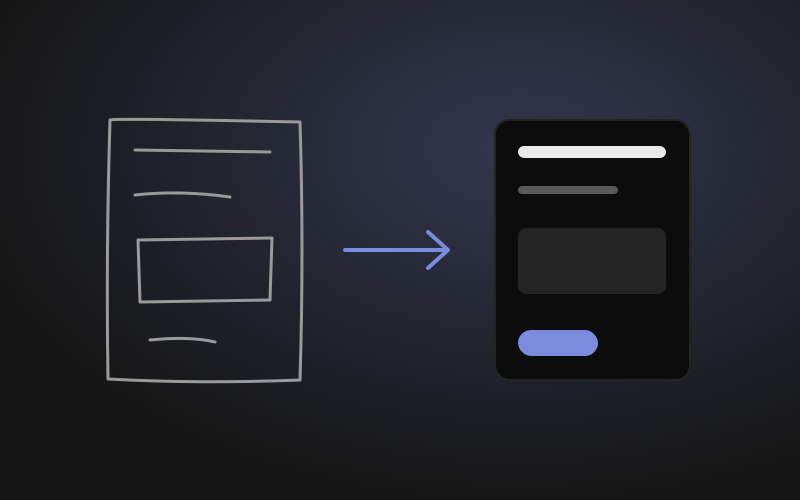
Sketchboard: Sketch-to-Mockup iPad App
3rd Place of 20+ teams | Google DeepMind x Gradient x tokens& Open Models Hackathon
A SwiftUI/PencilKit iPad app, co-built in six hours, that turns hand-drawn sketches plus voice dictation into rendered HTML mockups using a multi-step Gemma 4 generation loop.
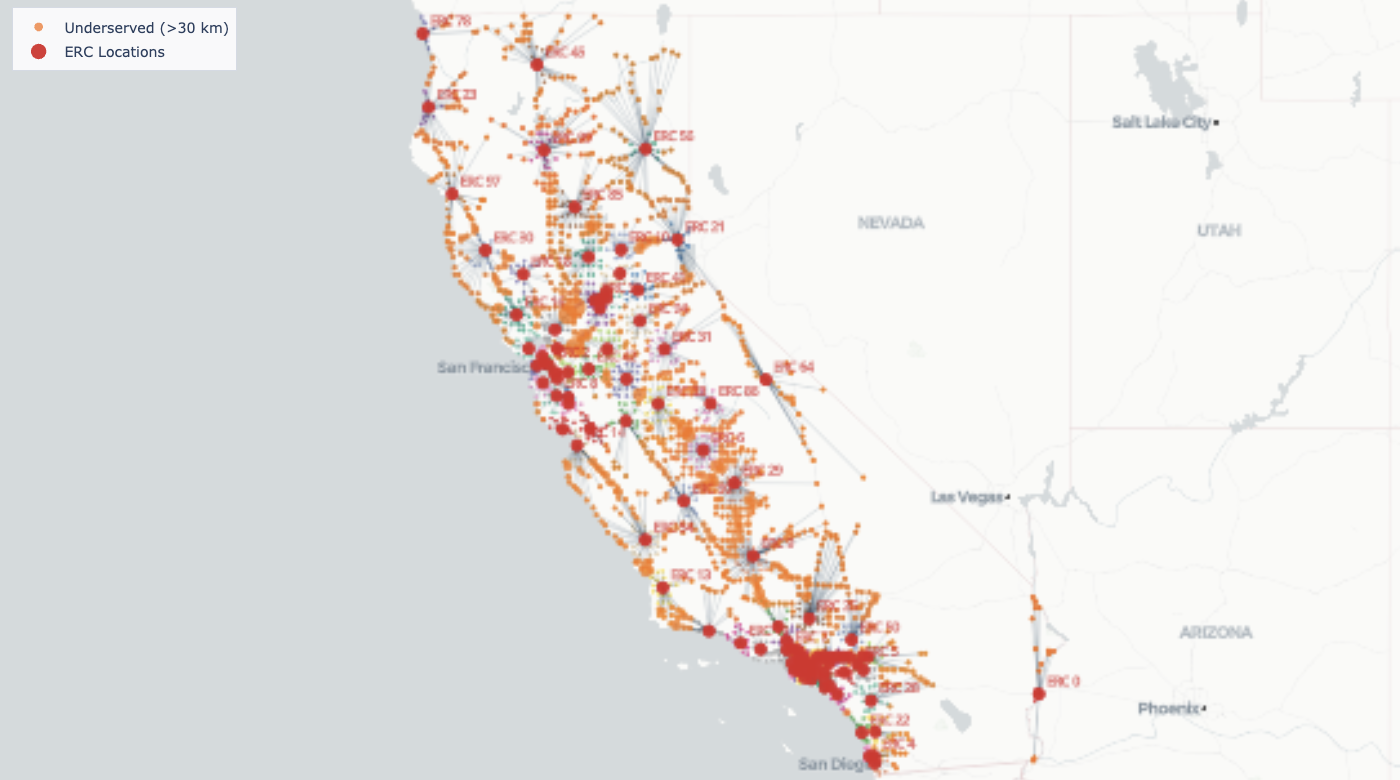
Emergency Response Allocation: California
Combined severity-weighted p-median facility location with a LightGBM spatiotemporal risk ranker to optimize Emergency Response Center placement and hourly accident risk deployment across California, delivered as a live two-track decision-support dashboard.

RAID: Retrieval-Augmented Inverse Dynamics
Proposed and implemented a retrieval-augmented inverse dynamics head for robotic manipulation that achieves 6.5x lower action prediction error than direct MLP baselines with only 25 demonstrations, by combining a frozen world-model encoder with cross-attention over a demonstration memory bank.
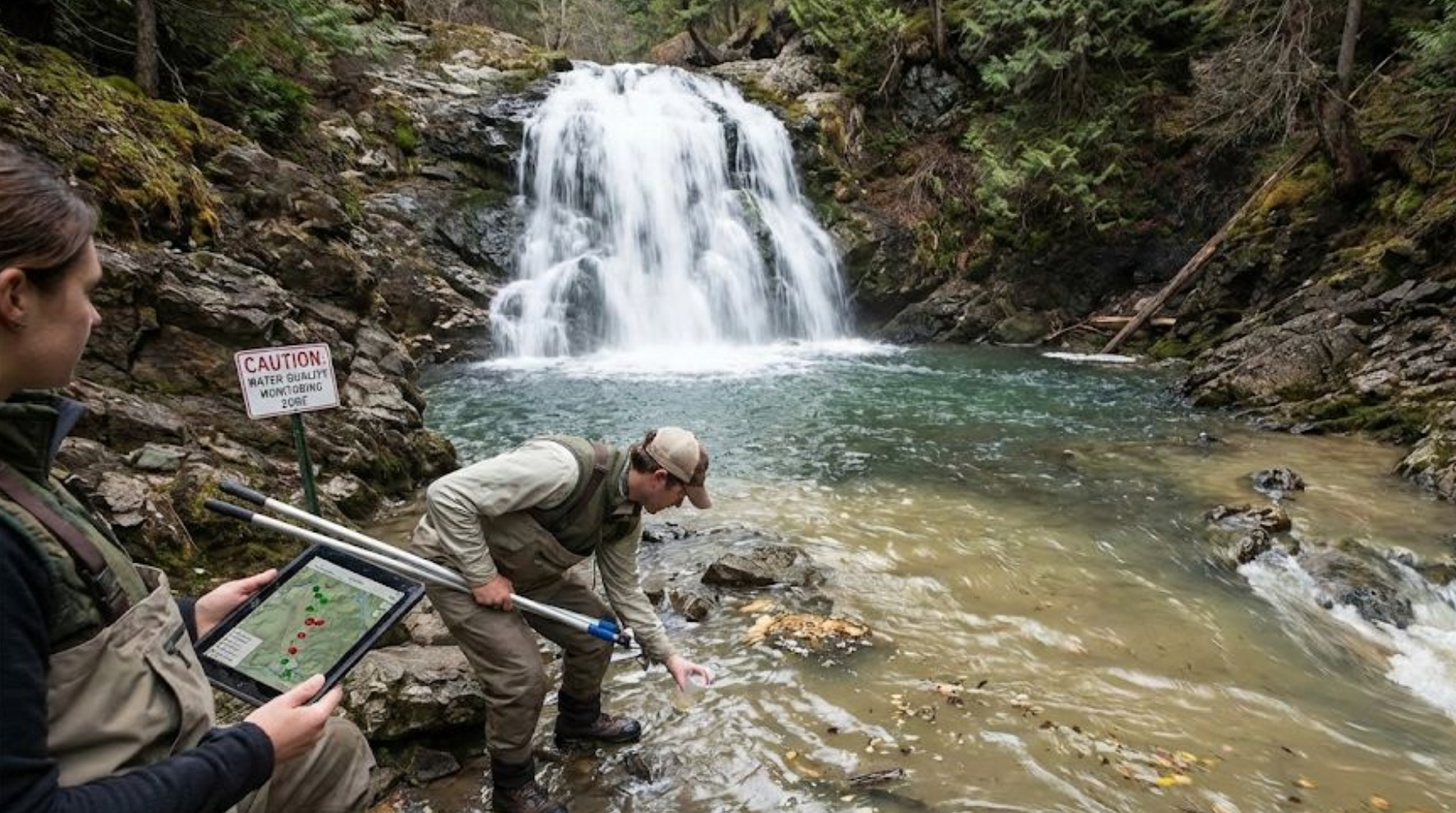
Predicting Water Quality Violations in California
Built a Random Forest classifier on five years of California drinking water test data to predict which water systems will violate Maximum Contaminant Level standards, achieving 85% recall and 0.94 ROC-AUC on held-out 2025 data — enabling proactive intervention before contamination events occur.
Optimization, Analysis & Data Engineering
5 projects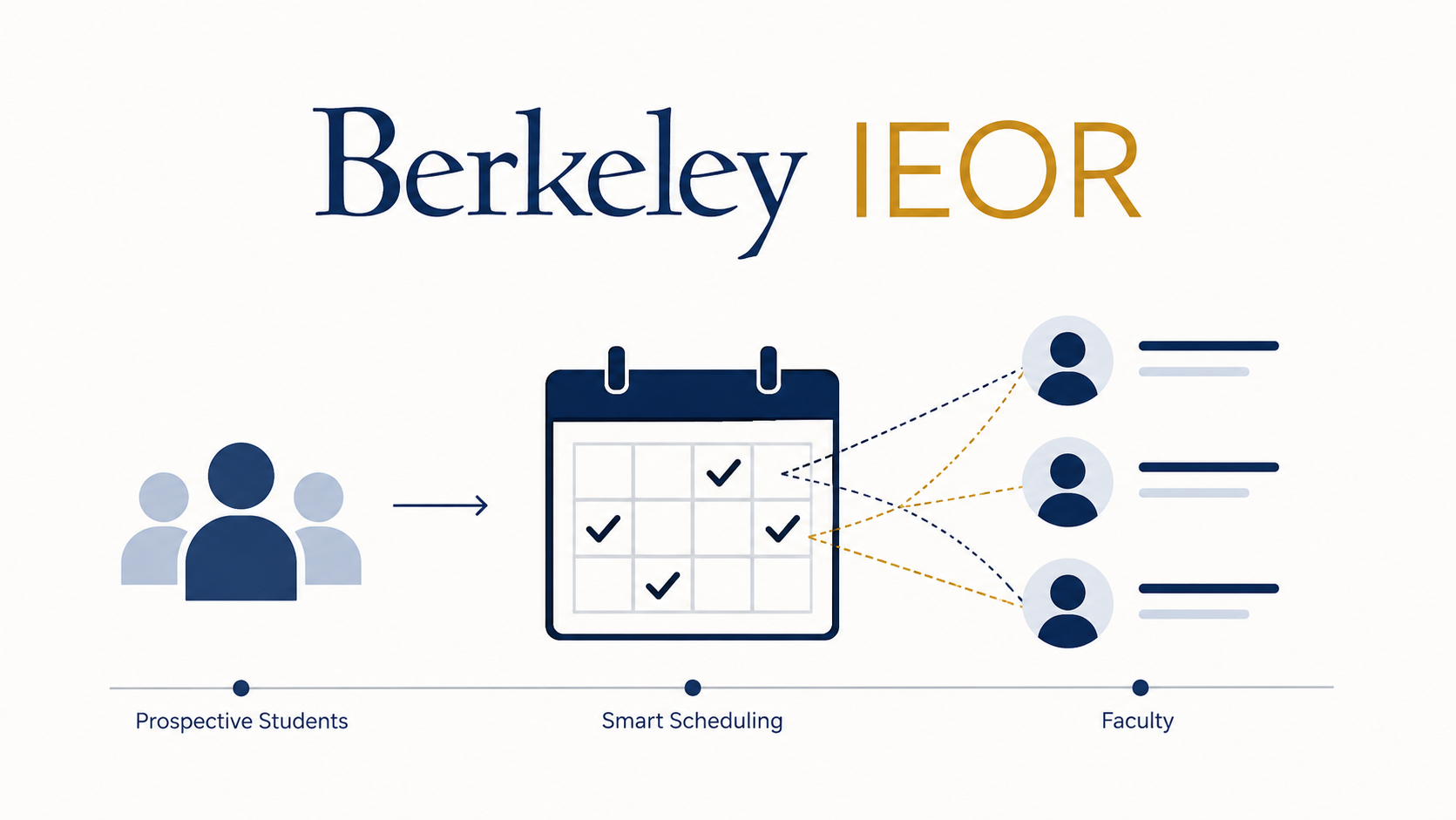
IEOR Visit Day Scheduler
End-to-end scheduling tool for UC Berkeley IEOR's prospective graduate student visit days — collects student preferences and faculty availability via auto-generated Google Forms, then runs a preference-weighted matching optimizer to produce personalized two-day meeting schedules for every student.
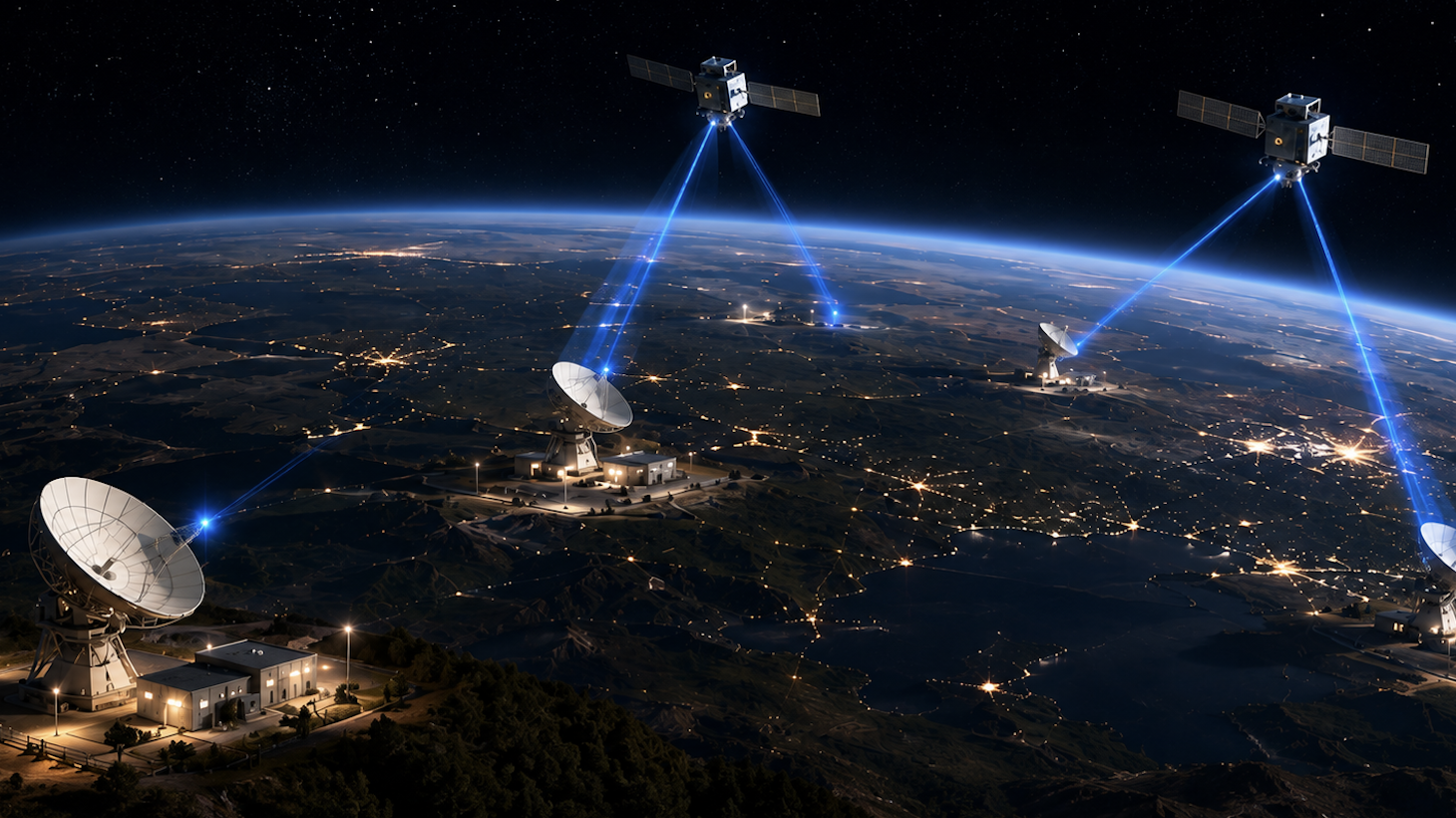
Project Argus: LEO Ground-Station Network Design
Modeled Starlink ground-station placement as a fixed-charge facility-location MILP, generating cost-coverage Pareto frontiers across demand models and elevation thresholds.
Google Hackathon: Understanding Customer Churn for 'BizGrow'
Identified the root cause of a Q3 churn spike for a SaaS client by isolating a high-value customer cohort, tracing their support ticket language to a specific oversold feature, and quantifying $29M in at-risk contract value — delivered as an analytical consulting case in UC Berkeley's Google Hackathon.
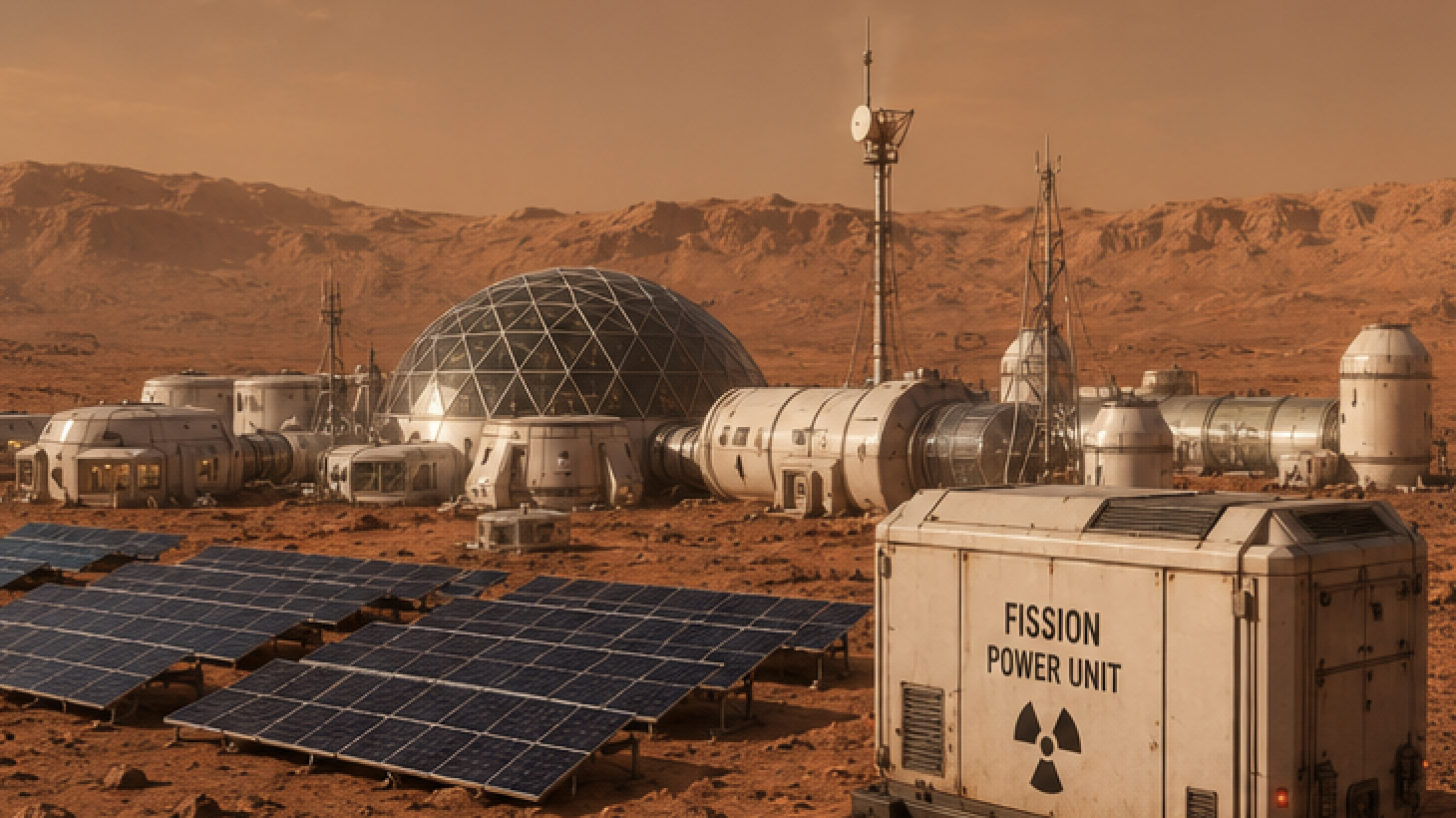
Powering Mars Colonies: Solar, Fission, and Fusion
Compared five power architectures across colony scales from 6 to 2,000 people using McKelvey feasibility classification, LCOE modeling, and 1,000-run Monte Carlo reliability simulation under real Mars dust storm data.
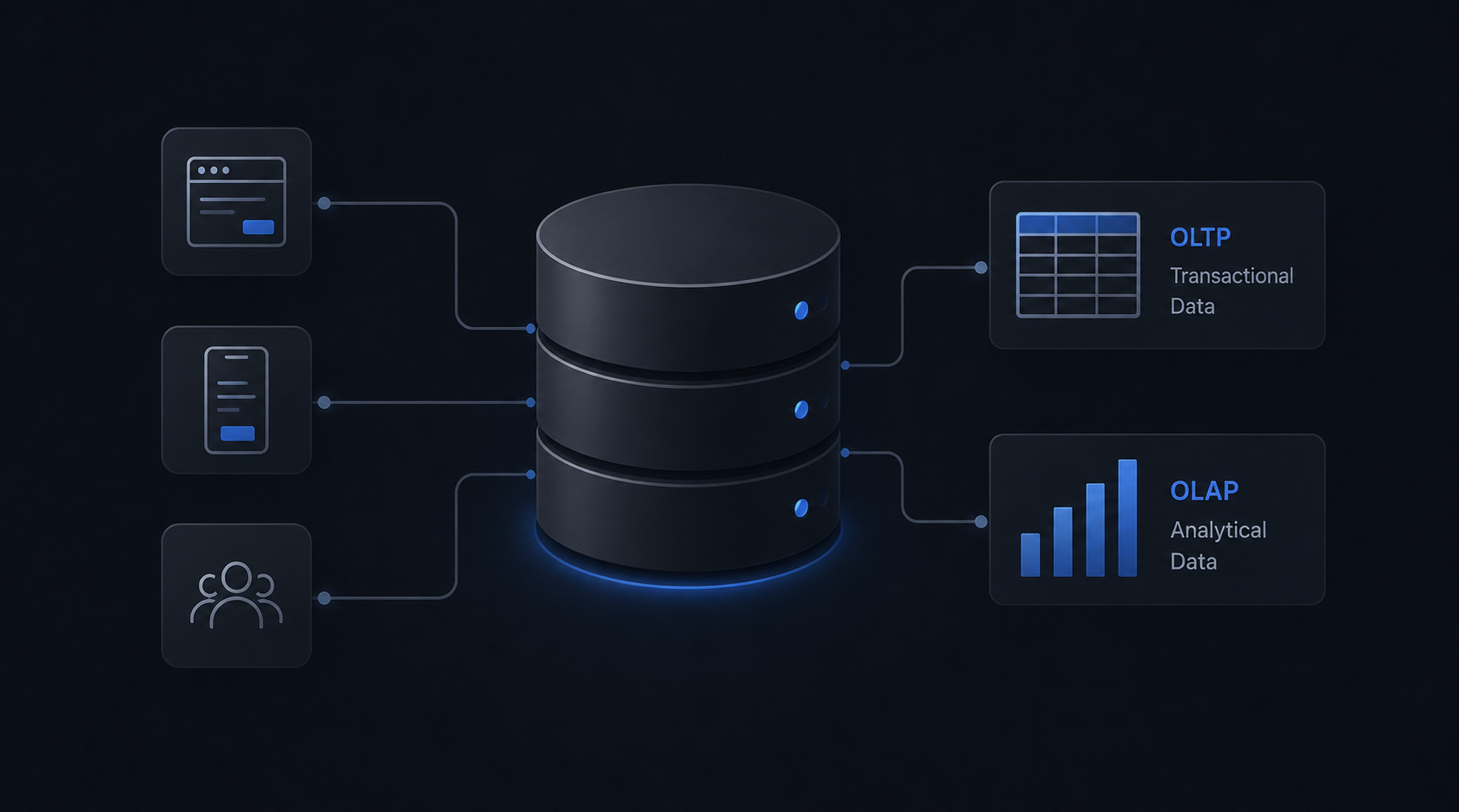
Voyla! Database Design: OLTP, OLAP, and Analytics Pipeline
Designed and implemented a full database stack for an AI travel recommendation startup — PostgreSQL OLTP (3NF), Python ETL pipeline, star-schema OLAP warehouse on Azure, Databricks/Spark analytics, and a Streamlit dashboard — processing 172,644 real user interactions across 53,520 locations.